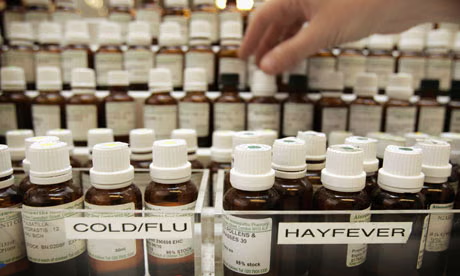
A Natural Approach to Rapid Relief
What is an Acute Illness?
Acute illnesses include common ailments such as the flu, the common cold, sore throats, earaches, digestive upsets, and minor injuries like bruises or stings. Unlike chronic diseases, which require deep constitutional treatment, acute cases focus on the immediate, presenting symptoms.
 Common Homeopathic Remedies for Acute Care
In homeopathy, the choice of remedy depends on the specific way an individual experiences symptoms. Here are a few commonly used remedies:
-
Aconite (Aconitum napellus): Often the first remedy considered for symptoms that come on suddenly, especially after exposure to cold, dry wind. It is used for early-stage fevers accompanied by anxiety.
-
Arnica (Arnica montana): The primary remedy for physical trauma, bruising, and muscle soreness. It is a staple in many natural first-aid kits.
-
Belladonna: Used for acute conditions characterized by redness, heat, and throbbing pain, such as a high fever or a sudden, painful sore throat.
-
Nux Vomica: Frequently used for digestive issues, especially those resulting from overindulgence in food or drink, or for “flu-like” symptoms accompanied by irritability and chilliness.
-
Gelsemium: A common remedy for flu symptoms characterized by dullness, dizziness, and a heavy feeling in the limbs.
How It Works
Homeopathic remedies are highly diluted substances derived from plants, minerals, or animals. Proponents suggest that these dilutions stimulate the body’s self-healing mechanisms. Because the remedies are non-toxic and prepared through a process of serial dilution (potentization), they are generally considered safe for children, pregnant women, and the elderly when used as directed.
The Importance of Symptom Matching
The success of homeopathy in acute care relies on “individualization.” For example, two people with a cough might receive different remedies: one might need Bryonia if the cough is dry and hurts the chest, while another might need Pulsatilla if the cough is loose and worse in a warm room.
Conclusion
Homeopathy offers a gentle, non-invasive option for managing the symptoms of minor acute illnesses. However, it is important to remember that homeopathy should complement, not replace, conventional medical care in serious situations. If symptoms are severe, persistent, or include high fever and difficulty breathing, professional medical advice should be sought immediately.
References:
-
The Complete Homeopathy Handbook by Miranda Castro.
-
Homeopathic Medicine at Home by Maesimund B. Panos, M.D., and Jane Heimlich.
-
National Center for Homeopathy (NCH) – “Acute vs. Chronic Care” resources.
-
Ullman, D. (1991). Discovering Homeopathy: Medicine for the 21st Century. North Atlantic Books.